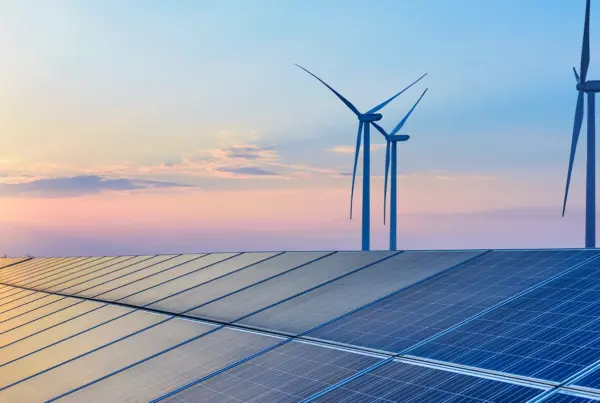
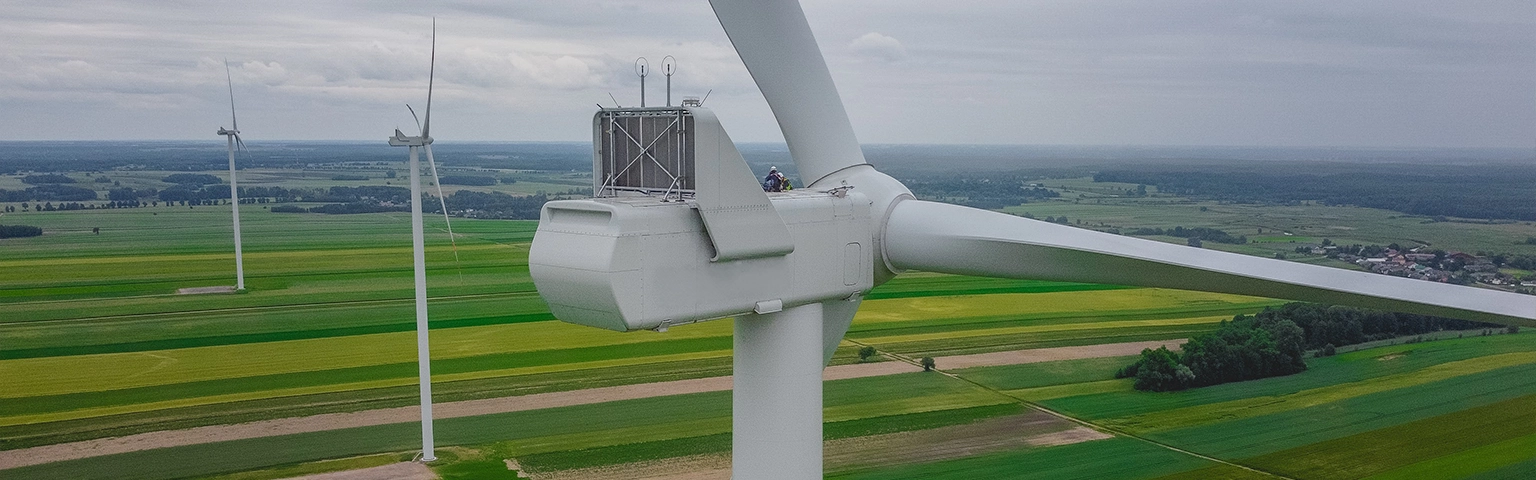
Wind energy is one of the world’s main sources of renewable energy, representing approximately 25% of global installed renewable energy capacity, equivalent to 1,291 GW, according to the latest report by IRENA. Wind energy is now a central pillar of the global energy transition, due to its key characteristics: productive efficiency, economic viability and positive environmental impact.
According to the Global Wind Energy Council, global wind installations increased by 40% in 2025, reflecting the relevance of this type of energy and its growing demand.
What Is Wind Energy?
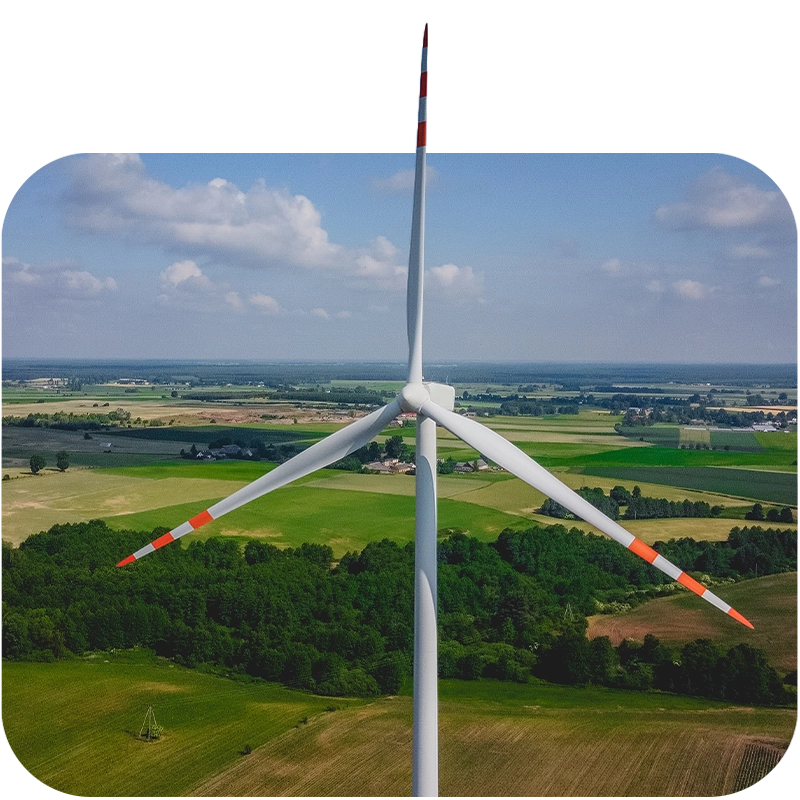
Wind energy is a renewable energy source obtained from the kinetic force of the wind, which is converted into electrical energy through a wind turbine.
This wind turbine is made up of turbines equipped with blades that capture the movement of air and convert this kinetic energy into mechanical energy, which is then transformed into electricity by a generator.
How Does Wind Energy Work?
The Essential Components of a Wind Turbine
A wind turbine is made up of several elements that work together to convert wind energy into electricity. Each component has a specific role in this process:

Rotor (Blades and Hub)
The rotor is responsible for the initial capture of wind energy. Comprising three aerodynamic blades connected to a central hub, its function is to convert the kinetic energy of the wind into mechanical rotational energy. The rotor typically turns between 12 and 30 revolutions per minute (rpm), depending on wind speed and turbine design.

Gearbox
The gearbox increases the rotor’s rotational speed from 12–30 rpm to approximately 1,500 rpm. This amplification is necessary because the generator requires much higher rotational speeds to produce electricity efficiently.

Generator
The generator is the component responsible for transforming mechanical energy into electrical energy. It works according to the principle of electromagnetic induction, converting rotation into electric current that can be distributed through the grid.

Orientation and Control System
Each wind turbine has sensors (anemometer and wind vane) that monitor wind speed and direction. An automatic orientation system rotates the nacelle (the upper structure) up to 360 degrees to maximise energy capture as wind direction changes.
Tower
The tower supports the weight of all components and raises the rotor to a height where the wind resource is more consistent and stronger. Heights vary, but typically range between 60 and 120 metres.
From the Wind Turbine to the Electricity Grid
The wind turbines in a wind farm do not operate in isolation. They are all interconnected through underground cables that channel the electricity produced to a transformer substation.
At this substation, the voltage of the electricity is increased to levels suitable for efficient transmission through the national or regional electricity grid. This voltage step-up process reduces losses during transport.
The electricity is then fed into the grid through connection points, where it is distributed to consumption centres (cities and industries) or stored in battery systems when production exceeds immediate demand.
Types of Wind Energy
Onshore vs Offshore
The choice between an onshore wind farm (on land) and an offshore wind farm (at sea) depends on several factors: wind resource availability, geographic location, environmental constraints and economic viability.
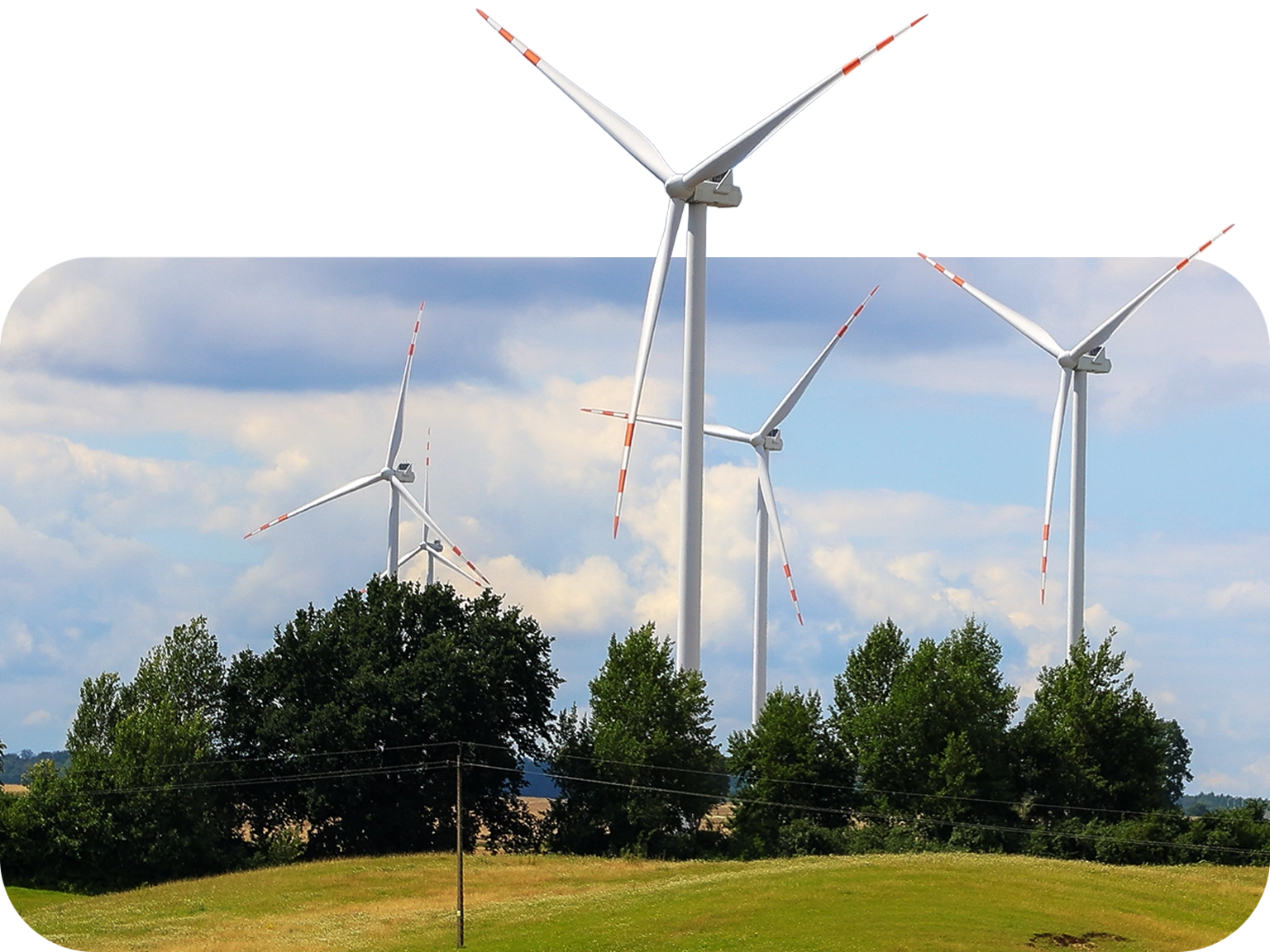
Onshore Wind Farms
Onshore wind farms are installed on land, typically on plateaus, mountain ridges or open areas with a strong wind resource.

- Construction and installation costs that are significantly lower than offshore alternatives
- More accessible and cost-effective maintenance
- Generally shorter development and permitting periods\
- Mature and widely established technology
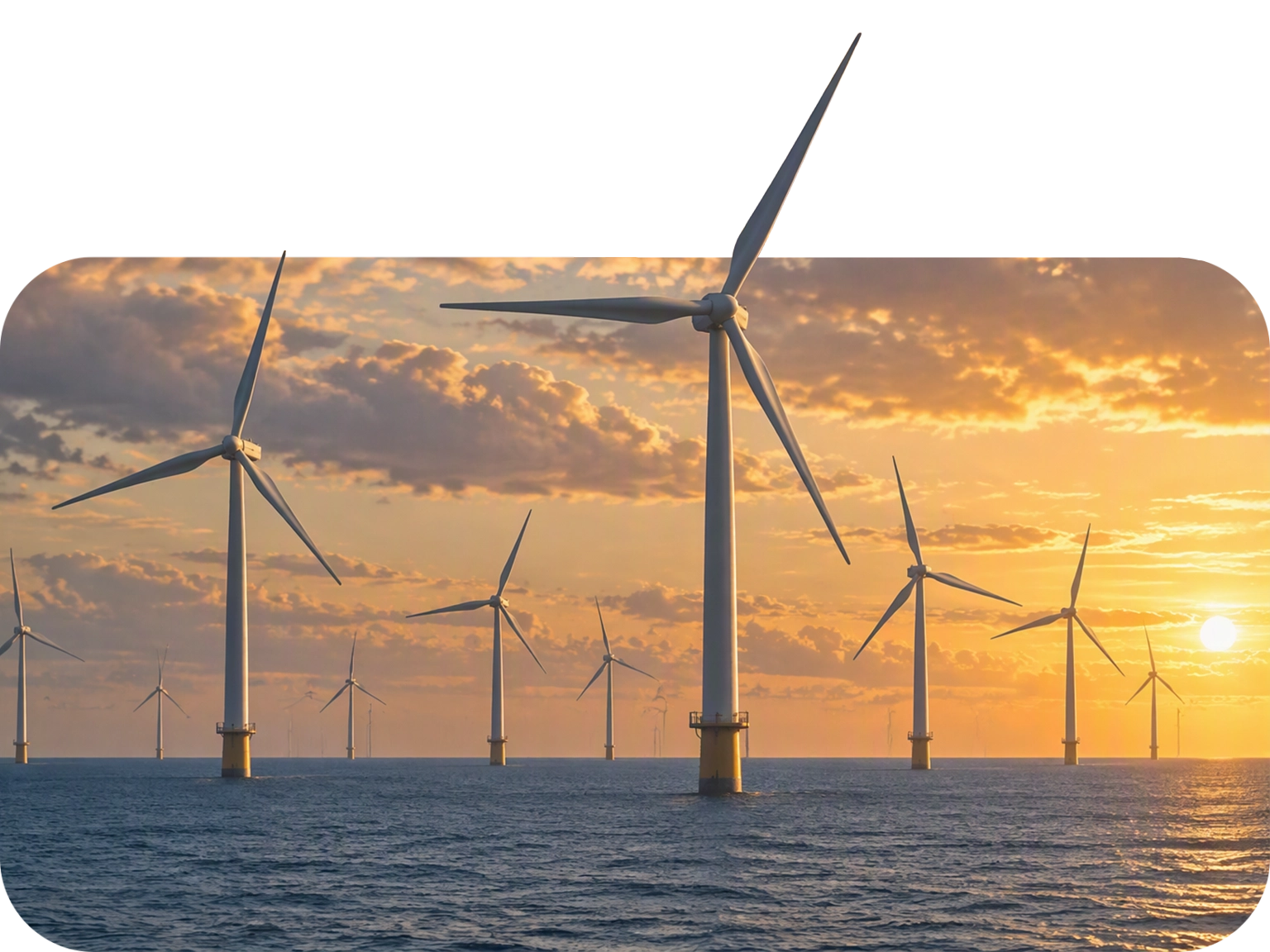
Offshore Wind Farms
Offshore wind farms are installed in bodies of water – typically in coastal areas or shallow seas – where the wind resource is particularly favourable.
- Superior wind resource – offshore winds are typically stronger and more predictable
- Higher capacity factors (35–45% vs 25–35% onshore)
- No visual impact for onshore communities
- Potential for very large-scale deployment – offshore turbines can reach 15+ MW of rated capacity
Main Advantages of Wind Energy
Continuous Production (Day and Night)
Wind energy produces electricity without depending on sunlight. It operates 24 hours a day, provided there is a wind resource, complementing solar energy and increasing energy coverage.

Clean Energy with Zero Emissions
Wind energy does not release CO₂ and consumes virtually no freshwater during operation. In less than a year, a wind turbine can recover the energy invested in its manufacture and, over a 25- to 30-year useful life, produce between 20 and 30 times more energy than was required for its production.

Low Land Occupation and Reversibility
Wind turbines occupy a limited area and are compatible with other land uses, such as agriculture and grazing, and can coexist with biodiversity measures. At the end of the project’s useful life, the turbines can be dismantled, allowing the affected area to be restored.
Wind Energy at Greenvolt
Greenvolt is active in the development of onshore wind energy projects across different geographies, with a pipeline of almost 2.5 GW in wind projects. Through this commitment, the Group contributes to accelerating decarbonisation, reducing dependence on fossil fuels and supporting the electrification of the economy with competitive and sustainable renewable energy.
In wind farms, this approach is supported by measures to protect and enhance biodiversity, integrated from the planning and construction phases through to project operation. Through its biodiversity strategy, Greenvolt applies the mitigation hierarchy: avoid, minimise, restore and offset impacts, while promoting initiatives that seek to align renewable energy production with ecosystem conservation and the creation of value for local communities.