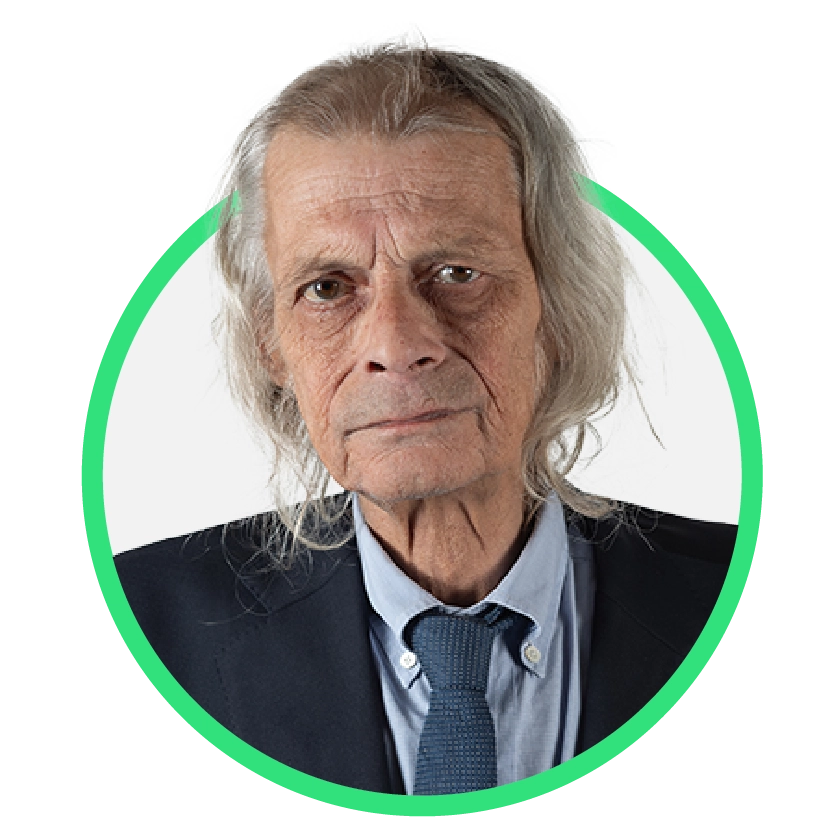
João Manso Neto
CEO Greenvolt Group
”2025 confirmed that our three‑pillar model is the right engine for sustainable long‑term growth.
Looking back at 2025, what were the key highlights and takeaways from our results this year?
I would characterize 2025 as a year of stabilization of the group through the three business segments, while reconfirming the positive outcomes from the defined strategy, namely to what concerns the asset rotation objectives. Following a challenging 2024, when market conditions limited our ability to divest assets, we saw a sharp improvement in momentum. Under our asset rotation policy, we successfully executed the sale of approximately 1 GW of assets, which was instrumental in more than doubling revenues, achieving a record EBITDA above €200 million, and returning to positive net income attributable to Greenvolt . This performance confirms that, even in complex market environments, asset rotation remains a highly effective strategy when built on high‑quality assets. Our other business lines also contributed meaningfully: Distributed Generation continued progressing towards break‑even, and Biomass, despite an extraordinary outage at one of our UK plants, remained a resilient source of stable cash flow. Overall, our performance in 2025 validates our three‑pillar model as the right engine for sustainable long‑term growth.
How would you describe the role of KKR in our journey? In what ways does their support as a shareholder help us accelerate our growth across the different geographies and business lines?
KKR is fundamental to our growth trajectory. In 2025, we maintained an annual CAPEX program exceeding €800 million, something that would not have been possible without a shareholder of their scale and commitment. They bring two decisive advantages: Financial support, giving us stability to execute long‑term, capital‑intensive projects, and a Global perspective and network, opening doors to opportunities within their extensive portfolio that would be more difficult to access otherwise. Their combination of capital strength and strategic reach is irreplaceable as we navigate the global energy transition.
Are we committed to continuing to invest in our three core business lines, and why is a multi‑technology strategy the right choice for the Group?
Yes. We remain fully committed to our three core business lines because together they form a coherent, strategically balanced portfolio. Biomass provides reliable baseload power and stable cash flow; Utility‑scale is our engine for large‑scale renewable generation, now strengthened by storage; and Distributed Generation (DG) is increasingly recognised by the EU as a fundamental pillar of the future energy system. These technologies are complementary by design.
At the same time, being a multi‑technology player is central to our long‑term strategy. Market conditions shift constantly, and diversification protects us from technology‑specific volatility. Biomass ensures stability, solar combined with storage maximises value, and wind remains a scarce, high‑return asset. This mix creates resilience: DG will continue to grow steadily, asset rotation will remain cyclical, and biomass will anchor predictable cash flows. Together, they allow us to create sustained long‑term value while operating with balance and strategic flexibility.
How is our portfolio evolving to provide the baseload stability that grids increasingly need?
Intermittency is the structural challenge of traditional renewables. By combining baseload technology with utility‑scale storage, we stabilise our generation profile. On high‑generation days, batteries enable us to store excess power and dispatch it when it is most valuable to the grid. The synergy between Biomass and storage strengthens our reliability and demonstrates that a 100% renewable portfolio can still provide dependable, stable output.
Asset rotation feels more complex than it was a few years ago. Does the strategy still hold up in terms of profitability and execution?
Absolutely. The key difference lies in asset quality. The market is more selective today, and buyers look for differentiated, high‑tier projects. We do not build commoditised projects. We develop hybrids, solar combined with storage, and standalone storage assets, which are vital in markets like Poland. We also maintain a strong focus on wind, a scarce and highly valued resource, with around 1.5 GW under construction. Our strategy holds because we originate and build assets that retain their value regardless of market cycles.
What are the biggest challenges you see right now when it comes to our global supply chain?
The supply landscape is shifting. Western suppliers continue to lead in wind, while Chinese suppliers dominate solar, batteries, and increasingly transformers. This dynamic should be viewed through a pragmatic, global‑trade lens. Restricting imports would risk retaliation and significantly increase equipment costs, slowing renewable deployment globally. Europe’s competitive path lies in innovation, not labour‑intensive manufacturing. As technologies evolve, for example, faster‑than‑expected transitions toward sodium‑ion batteries, the focus must remain on winning the future, not preserving segments where others already lead.
How is Greenvolt approaching financing and debt structure to support long term stability and sustained growth across so many geographies?
Our financing strategy is built around long term stability and the ability to continue growing across the geographies where we operate. We rely on a strong base of relationship banks, both Iberian and international, whose continued support provides us with predictable access to competitive funding.
Project financing remains a core pillar of our capital structure, ensuring that each asset is financed in a way that protects the Group’s resilience over time.
This disciplined approach, combined with our asset rotation strategy, gives us the flexibility to pursue new opportunities while maintaining control over leverage, liquidity, and risk.
Together, these two elements, long term project finance and selective asset rotation, allow us to keep expanding sustainably in the markets where we are already present.
How does Greenvolt’s leadership define and execute strategic priorities to strengthen the Health & Safety culture across all business segments while protecting people, assets, and long‑term business sustainability?
Health & Safety is a core strategic priority for Greenvolt, essential to protecting people, ensuring asset reliability, and safeguarding the Group’s long‑term sustainability. In 2025, we reinforced this commitment by strengthening both corporate and local H&S teams, appointing Safety Leaders, and rolling out new training, engagement, and communication initiatives. We also established Group‑wide policies, frameworks, and critical safety rules through our “Keeping Us Safe” strategy, creating a consistent standard across geographies and technologies.
Alongside this, we enhanced operational discipline through audits, compliance checks, and targeted programmes addressing critical risks and supplier qualification, while expanding health‑promotion initiatives and specialised training. These efforts improved data quality, visibility, and our ability to anticipate risks. Looking ahead, our focus is on bringing governance even closer to the field to ensure that standards translate directly into daily behaviours. Ultimately, excellence in Health & Safety depends on active leadership and collective ownership, and it is what allows our growth to remain safe, responsible, and resilient.
What steps are we taking to strengthen operational efficiency across our business lines?
One of our priorities for 2026 is strengthening operational efficiency by bringing clearer process discipline across the organisation. As we’ve grown, complexity has increased, across geographies, technologies and business lines, so we are shifting from isolated execution to full, end‑to‑end ownership of the processes that matter most.
At the same time, we are embedding continuous improvement into the way we work. We monitor performance indicators, address bottlenecks, automate where it adds value and keep close feedback loops with the teams on the ground. This helps us reduce rework, improve cycle times and increase predictability, especially in areas like project execution, CAPEX governance and financial closing.
Ultimately, improving operational efficiency means building processes that are structured, transparent and continuously evolving, ensuring we can grow with control while consistently delivering high‑quality results.
Regarding our DG segment, which has seen a lot of investment and expansion into different geographies, when should we expect to see that business transitioning to profitability?
We expect the DG segment to reach profitability in 2026. This comes from the natural maturation of our operations and the cumulative nature of the business model. DG grows exponentially as new long‑term PPAs and energy communities accumulate over the existing portfolio. It is also a consultative market, clients buy when they are ready. By remaining patient, consistent, and close to the market, we are now seeing that groundwork translate into sustainable profitability.
Greenvolt operates in 20 countries. How do we maintain a unified culture across such diversity?
Our challenge is not only geographical, it is the diversity of profiles across the company. We do not aim to impose a rigid culture; instead, we align everyone around our core values of Agility, Ambition, Empowerment, and Team Spirit. These values guide how we work, lead, and collaborate across all regions.
We succeed by respecting local subcultures rather than trying to make everyone the same. We celebrate these differences because they help us attract top talent and stay connected as a truly global team.
Operationally, we put this into practice by decentralizing our expertise. We don’t need everyone in one place, financial, engineering or operational hubs can sit in Portugal, Spain or Poland, giving teams the autonomy to lead locally while contributing globally.
This flexibility helps us navigate cultural and operational differences quickly and stay aligned on what matters. At Greenvolt, respecting and understanding our diversity isn’t just an HR idea, it’s essential to how we operate and lead. We remain united by our goals and empowered by the differences that make us stronger.
Our success depends on the expertise of our people. How is Greenvolt investing in training, specifically in AI, to ensure our teams are empowered to drive our mission forward?
Our people are our greatest asset. To remain leaders, we must continuously elevate how we work. AI training is central to this evolution. We are empowering teams in two ways: Enhancing expertise through tools for predictive maintenance, precision biomass sourcing, and smarter grid integration. Automating repetitive tasks, allowing our people to focus on creativity, innovation, and client relationships.
Ultimately, this is a collective effort. Success requires everyone at Greenvolt to move beyond ‘business as usual’ and embrace new technology. We will continue to invest in our teams’ resilience, ensuring that together, we remain at the absolute forefront of the renewable energy industry.
Looking ahead, what are our primary goals for 2026? What would a successful year look like for our teams and our stakeholders?
Our main objective for 2026 is to significantly increase EBITDA, while ensuring our growth remains sustainable and organic. We do not plan to enter new geographies. Instead, our focus is on maximizing the potential of our existing footprint across our three business lines.
For us, a successful 2026 means achieving a positive result in our DG segment, delivering strong returns through disciplined asset rotation in utility‑scale, and maintaining high operational uptime in biomass without material outages. But reaching these targets ultimately depends on the commitment and execution of all our teams, those in the field, in development, in finance, in operations, and in every support function that keeps the business moving.
Everyone has a role: staying aligned, anticipating issues before they escalate, driving operational discipline, and maintaining the quality and reliability that our stakeholders expect. If we deliver on these fronts together, we will firmly cement our trajectory of profitable, long‑term growth.