Renewable energy is now central to the global public debate. The energy transition, initially viewed as an essential response to tackling climate change and replacing fossil fuels, is today a strategic tool for meeting environmental goals and for ensuring greater energy autonomy and security, supporting growth, and strengthening countries’ economic competitiveness. Understanding the types of renewable energies is an important first step in that transition.
In 2015, the United Nations established Sustainable Development Goal 7, which aims to “ensure access to affordable, reliable, sustainable and modern energy for all”. One of its specific targets is to substantially increase the share of renewable energy in the global energy mix by 2030. This goal reflects global recognition that energy transition is essential not only to mitigate climate change, but also to create economic opportunities, generate jobs, and strengthen energy security.
In November 2023, the revised Renewable Energy Directive adopted by the European Union introduced targets to almost double the existing share of renewables in the EU. The objective is to raise the share of renewables in the EU’s total energy consumption, increasing the binding 2030 target to 42.5%, with the ambition of reaching 45%.
What are renewable energies?
According to the United Nations, renewable energy refers to “energy derived from natural sources that are replenished at a higher rate than they are consumed”. In practical terms, it is energy from natural resources that do not run out, or that can be replenished sustainably without compromising their future availability. In addition, renewable energies produce low or near zero greenhouse gas emissions.
The growth of renewable energies in recent years has been essential and significant. According to the International Renewable Energy Agency (IRENA), global renewable energy capacity reached 5,149 GW at the end of 2025. In addition, renewables account for 49.4% of global installed electricity capacity, with solar, wind and hydropower leading this transition.
Considering isolation, the different types of renewable energies are not a single, one‑size‑fits‑all solution. Instead, it is their combined use, based on diversification and complementarity between technologies, that helps optimise energy system performance. To achieve this, it is essential to understand the strengths of each source and adopt a strategic approach that ensures effective integration.
In this article, you will discover the main types of renewable energies and the specific benefits of each.
The main types of renewable energies

Solar energy
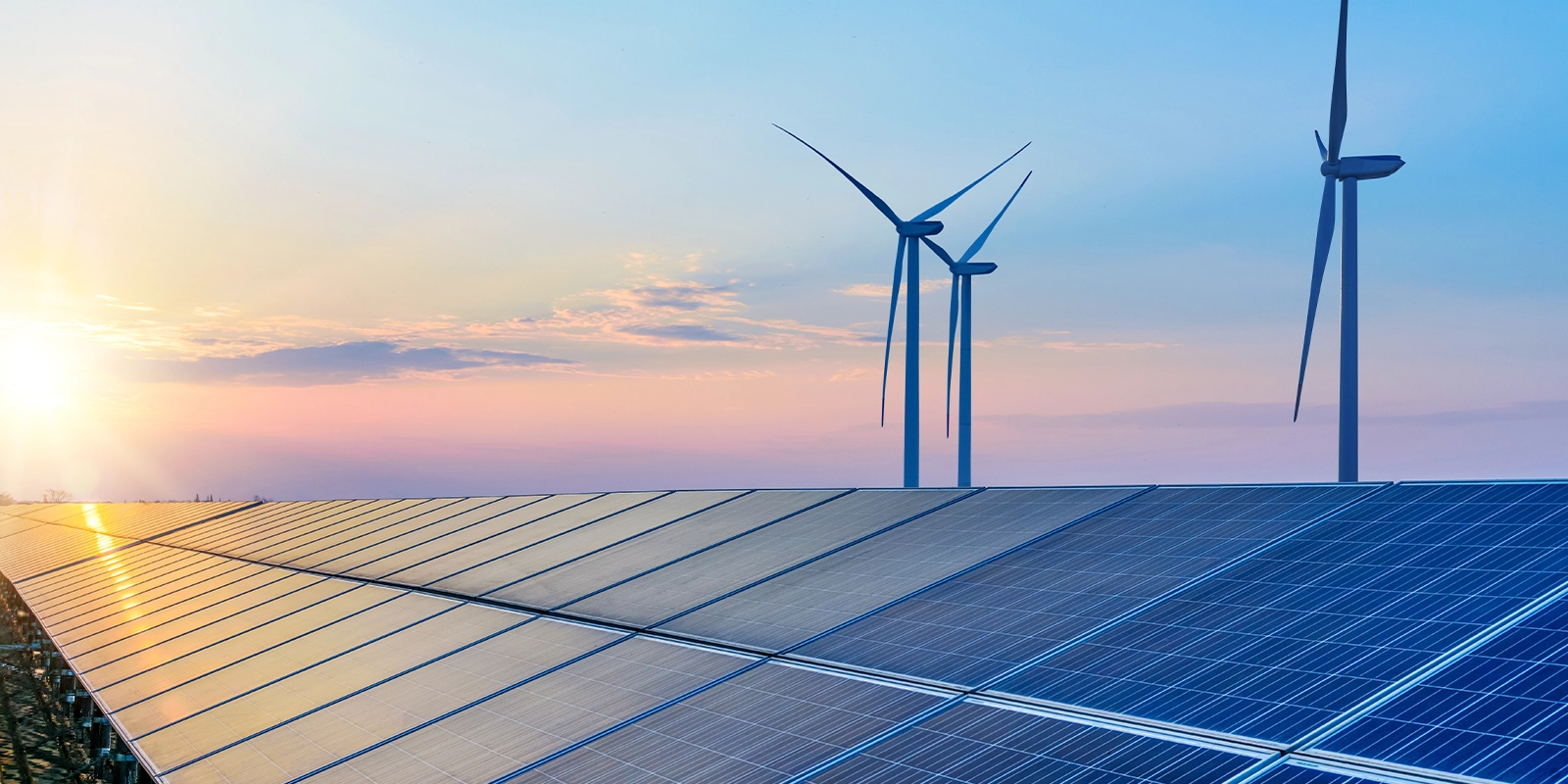
Solar energy is the most abundant of all energy sources — within just one hour, the solar radiation reaching Earth is equivalent to the world’s energy consumption for an entire year.
Existing solar technologies can convert sunlight into electricity and heat:

Wind energy
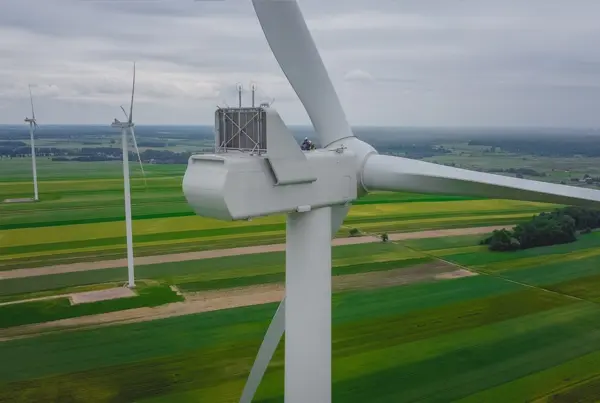
Wind energy is generated from the kinetic energy of the wind, which is converted into electricity using a wind turbine made up of a rotor, a gearbox and a generator, converting the mechanical energy of rotation into electrical energy.
There are two types of wind power generation depending on where turbines are installed:

Biomass
Biomass includes organic materials obtained from living organisms, including plants and animals, such as forests, agricultural residues, urban wood waste and organic waste. These organic materials can undergo various conversion processes to be transformed into heat, electricity or biofuel, resulting in what is known as biomass energy or bioenergy.
Making use of sustainable biomass plays a strategic role, particularly in regions with a strong agricultural and forestry presence. This option not only adds value to residues that would otherwise be wasted but also delivers clear structural benefits: it promotes woodland clearance and active forest management, contributes directly to reducing wildfire risk, and reinforces a circular-economy approach by turning waste into energy resources.

Hydropower
Hydropower involves generating electricity by harnessing the kinetic energy of water. Facilities may be large dams with significant storage capacity, or smaller run-of-river installations with limited reservoir capacity.

Geothermal energy
Geothermal energy harnesses the Earth’s internal thermal energy, in the form of steam or hot water, to produce electricity or heat. The use of this renewable energy source is limited to regions with high geothermal activity, such as volcanic areas and active tectonic zones.
Advantages of renewable energies

Availability and versatility
Renewable energies are resources that are permanently available in the ecosystem. With advances in existing technologies and the possibility of integration between them, it is possible to tailor solutions to the needs and specific characteristics of each territory.

Environmental
Renewable energies enable energy production with reduced or virtually non-existent greenhouse gas emissions, making them essential to meeting climate targets.

Economic
The reduction in production costs, driven by technological advances and economies of scale, has made renewable energies more cost-competitive. In addition, growth in the sector also boosts job creation.

Energy security and independence
Renewable energies are generated locally, which makes them less vulnerable to geopolitical changes and fluctuations in international fossil fuel prices. By investing in these sources, countries can reduce their dependence on the global market and strengthen their energy independence over time.

Decentralisation
Renewable energies enable the deployment of decentralised systems, such as rooftop solar panels and turbines located close to consumption. This capacity reduces vulnerability to centralised power outages or energy price volatility. They also allow communities to participate in energy production and management through Energy Communities.

Technological innovation
The renewable energy sector is evolving rapidly, with significant advances in energy storage, smart grids and grid-integration technologies. Battery energy storage systems (BESS) are seeing major developments: increasingly affordable production costs and greater capacity, enabling renewable energy to be stored at a larger scale. At the same time, digitalisation is transforming grid management through real-time monitoring, forecasting powered by artificial intelligence models, and automated demand-response systems. These two interconnected advances—BESS alongside digital infrastructure—mean that variable renewables (solar and wind) are increasingly compatible with electricity systems.
How Greenvolt promotes
the expansion of renewable energies
Since its foundation, Greenvolt has established itself as a Group fully committed to 100% renewable energy. The development of renewable energies is based on an integrated approach that combines scale, proximity and circularity, responding to different needs within the energy system.
Existing solar technologies can convert sunlight into electricity and heat: